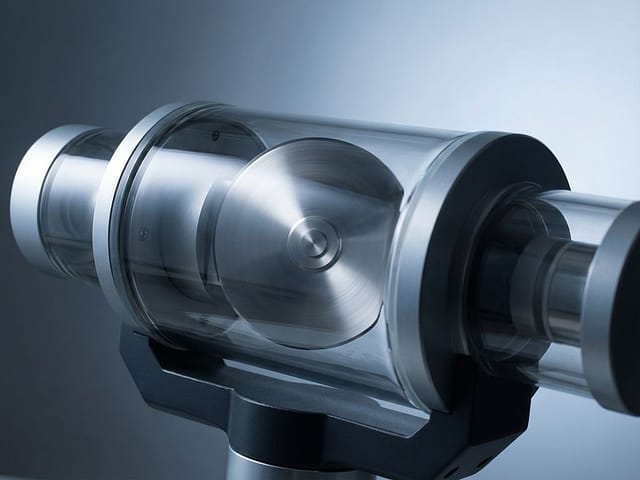
A rotating anode X-ray tube is an advanced X-ray imaging component that uses a spinning tungsten disc as the target for electron bombardment to produce X-rays. Unlike stationary designs, the rotating anode distributes heat across a larger surface area, allowing higher power operation and faster imaging speeds. This technology is fundamental in modern medical imaging systems, enabling everything from routine radiography to high-volume CT scans that require rapid, high-quality image acquisition.
What is a rotating anode X-ray tube and how does it work?
A rotating anode X-ray tube generates X-rays by firing electrons from a heated cathode filament onto a spinning tungsten disc called the anode. The X-ray cathode emits electrons that accelerate across a vacuum towards the rotating target material, typically a tungsten-rhenium alloy, where they strike and produce X-rays through energy conversion.
The fundamental components work together in a precise sequence. The cathode contains a tungsten filament that heats up and releases electrons through thermionic emission. These electrons accelerate through the vacuum tube under high voltage, typically between 40 and 150 kilovolts. When they strike the rotating anode disc, about 1% of their energy is converted into X-rays, whilst the remaining 99% becomes heat.
The rotating anode spins at speeds between 3,000 and 10,000 revolutions per minute, driven by an induction motor system. This rotation spreads the heat load across the entire disc circumference rather than concentrating it in one spot, preventing target damage and enabling continuous operation at higher power levels than stationary alternatives.
What’s the difference between rotating anode and stationary anode X-ray tubes?
Rotating anode tubes handle significantly more power and heat than stationary anode designs, making them suitable for high-volume imaging applications. Stationary anode tubes limit power to around 1–2 kilowatts, whilst rotating anode systems can operate at 50–100 kilowatts or higher, enabling faster exposure times and better image quality.
The heat dissipation capabilities differ dramatically between these designs. Stationary anodes concentrate all thermal energy in a small focal spot, requiring longer cooling periods between exposures. Rotating anode systems distribute heat across the entire disc surface, allowing continuous operation without overheating concerns.
Image quality improvements come from the rotating design’s ability to use higher power settings. This translates to shorter exposure times, reducing patient motion blur and improving diagnostic clarity. Stationary anode tubes work well for low-volume applications like dental X-rays or portable units, whilst rotating anode tubes are necessary for CT scanners, fluoroscopy, and high-throughput radiography departments.
Cost considerations also differ significantly. Stationary anode tubes cost less initially but may require more frequent replacement in high-use environments. Rotating anode tubes represent a larger upfront investment but provide better long-term value in demanding clinical settings.
Why do rotating anode X-ray tubes handle more power than stationary tubes?
Rotating anode tubes manage thermal loads more effectively by spreading heat across a much larger surface area than stationary designs. The spinning motion prevents heat concentration in a single spot, allowing the tube to operate at power levels that would instantly damage a stationary target.
Heat distribution principles explain this advantage clearly. A stationary anode receives all electron bombardment energy in a focal spot typically 1–2 millimetres wide. This creates extreme temperature concentrations that can melt tungsten targets within seconds at high power levels. The rotating anode spreads this same energy across the entire disc circumference, reducing peak temperatures dramatically.
The relationship between power capacity and imaging speed becomes important in clinical settings. Higher power enables shorter exposure times, which reduces patient radiation dose whilst improving image sharpness by minimising motion blur. This capability proves vital in paediatric imaging, cardiac procedures, and trauma situations where patient cooperation may be limited.
Cooling efficiency also improves with rotation. The spinning disc acts like a flywheel, storing thermal energy and releasing it gradually through radiation and conduction to the surrounding housing. This thermal management allows continuous operation in high-volume imaging departments without lengthy cooling delays between patients.
What are the main components inside a rotating anode X-ray tube?
The main components include the tungsten-rhenium target disc, molybdenum stem, rotor assembly, stator windings, cathode filament, and protective housing. Each component serves a specific function in X-ray production, heat management, and operational reliability.
The tungsten-rhenium target disc forms the heart of the system, providing the surface where electrons convert to X-rays. Tungsten offers excellent X-ray production characteristics, whilst the addition of rhenium prevents cracking under thermal stress. The disc typically measures 75–200 millimetres in diameter, with the focal track width optimised for specific imaging applications.
The molybdenum stem connects the target disc to the rotor assembly whilst providing thermal isolation. Molybdenum’s low thermal conductivity prevents excessive heat transfer to the bearing system, protecting critical rotating components from thermal damage. This stem also provides the mechanical strength needed for high-speed rotation.
Rotor and stator components create the motor system that spins the anode. The rotor contains copper windings embedded in the anode assembly, whilst external stator coils generate the rotating magnetic field. This induction motor design operates in the vacuum environment without physical contact, ensuring reliable operation and long service life.
The X-ray cathode assembly houses the tungsten filament that produces electrons through thermionic emission. Modern tubes often include dual filaments for different focal spot sizes, allowing optimisation between image resolution and heat capacity depending on examination requirements.
How does Varex Imaging help with rotating anode X-ray tube solutions?
We manufacture high-performance rotating anode X-ray tubes that meet the demanding requirements of modern medical imaging systems. Our solutions combine advanced materials science, precision engineering, and high-quality manufacturing to deliver reliable components that enable superior patient care through better diagnostic imaging.
Our rotating anode X-ray tube capabilities include:
- Advanced target materials – Proprietary tungsten-rhenium alloy compositions optimised for thermal performance and longevity
- Precision manufacturing – State-of-the-art production facilities ensuring consistent quality and performance specifications
- Custom solutions – Tailored designs meeting specific OEM requirements for different imaging applications
- Quality assurance – Comprehensive testing protocols ensuring each tube meets stringent performance and safety standards
- Technical support – Expert engineering assistance throughout the design and integration process
Our partnership approach focuses on helping OEM manufacturers develop world-class imaging systems by providing reliable, high-performance X-ray tube solutions. We work closely with customers to understand their specific requirements and deliver components that enable faster product development cycles and superior system performance.
Ready to learn more about our rotating anode X-ray tube solutions? Visit our website to explore our complete range of imaging components, or contact our team to discuss your specific application requirements and discover how we can support your next imaging system development project.